How to Build an Exercise Habit That Sticks
The Habit Isn't the Problem, the System Is
The gym bag has been sitting in the trunk since the second week of January. Building an exercise habit rarely fails from a lack of motivation; it fails because nothing was ever planned around it. The alarm gets snoozed, the class gets skipped, and Sunday night still ends with the same message sent to nobody: I will start Monday.None of that says anything about willpower or character. It says the routine was never built to survive an ordinary bad week. The fix is mechanical, not motivational, and it starts with a handful of specific decisions made in advance.Those decisions are what this article is actually about. Not what workout to do, but how to make doing it the easy option on most days.
What Building an Exercise Habit Should Actually Deliver
A workable exercise habit should hold up on a busy Tuesday, not just on a motivated Monday morning. It should not depend on how you feel when the alarm goes off. And it should be boring enough that skipping it takes more effort than doing it.That standard rules out most advice built around inspiration or willpower. Motivation is a mood, and moods are often unreliable, especially after a long day. A system built on cues, small targets, and low friction keeps working on the days motivation does not show up.Getting there does not require a complicated plan or a rigid schedule. It requires a few structural choices, made once, that remove the daily decision of whether today counts as a gym day.
Anchor Your Workout to Something You Already Do
New habits often stick fastest when they attach to a routine that already exists. For a beginner, that might mean training right after the school drop-off, or right before the commute into work along the Canada Line. The existing routine becomes the cue, so the workout stops needing to be remembered separately.Pick one anchor and keep it fixed for the first month, even if the time is not perfectly convenient. A consistent, slightly inconvenient slot beats a flexible one that depends on how the day happens to unfold. Once the anchor holds for a few weeks, everything else becomes easier to adjust.For anyone who still feels unsure about walking into a gym for the first time, that hesitation is normal and often fades faster than expected. Building confidence for a first visit is worth reading before the anchor habit even starts.
Shrink the Unit Until Missing a Day Feels Wrong
The workout that gets skipped is almost always the one that felt too big to start. Shrinking the unit fixes that: instead of an hour, the commitment becomes twenty minutes, and instead of a full program, it becomes simply showing up. For someone easing back in after an injury, surgery, or a long break, that lower bar can also be the safer choice for many people.Twenty minutes is long enough to count and short enough to never be worth talking yourself out of. Most sessions run longer once the hardest part, walking in the door, is already done. The goal in the first month is repetition, not intensity or a personal best.A smaller unit can also help protect against overreaching too early, which is often one of the fastest ways a comeback turns into another setback. Consistency at a low intensity usually beats an ambitious week that ends in three days of soreness and a missed week after.
Remove the Friction Before You Need Willpower
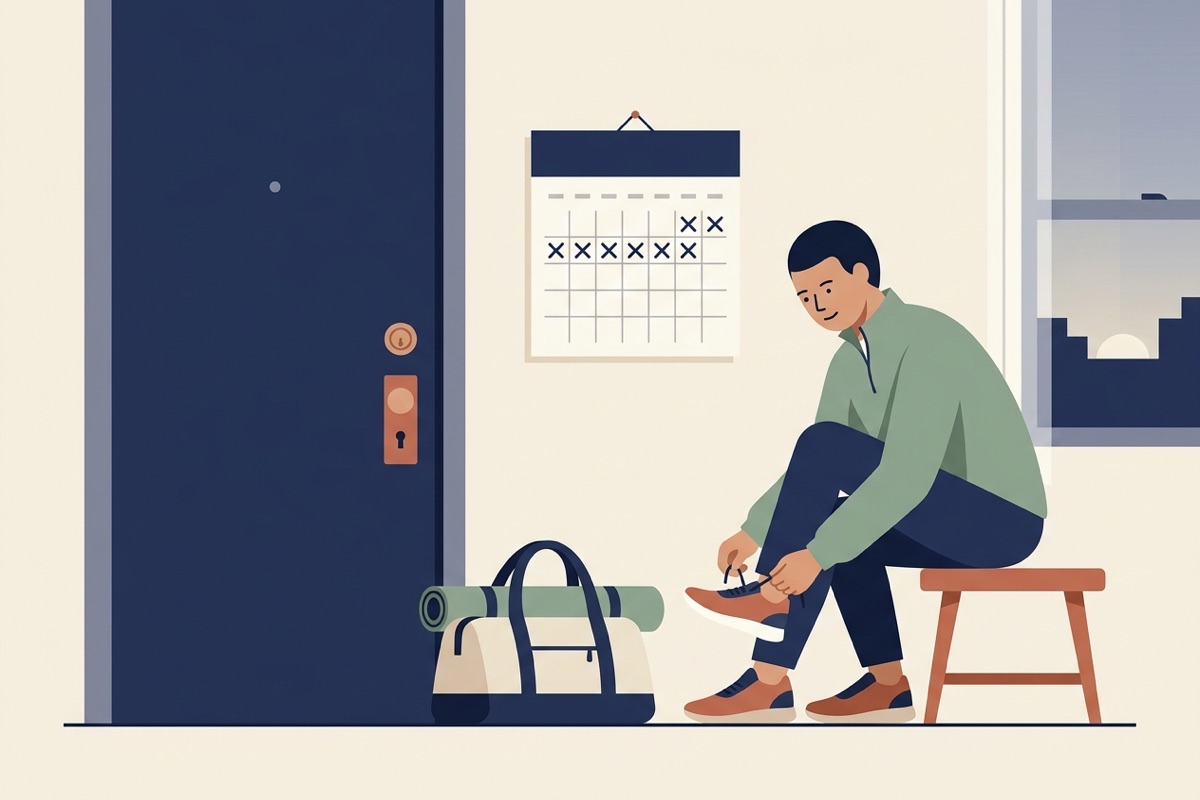
Same days, same time, every week, removes the daily decision of whether today is a gym day at all. For most people in Richmond, that means picking a slot that already sits on the commute, near Lansdowne or along No. 3 Road, instead of a separate trip. A stop that is already on the way gets kept; a special trip gets postponed.Friction works the same way in smaller, physical form. A gym bag packed and left by the door the night before removes one decision each morning. Clothes laid out, a water bottle already filled, and a class booked in advance all shrink the gap between deciding and doing.Booking a free intro session in advance works the same way for the very first visit. A time already on the calendar is far easier to keep than a plan to go whenever it feels right.
Let Identity Carry What Motivation Can't
Motivation fades, but identity is sturdier because it does not ask how you feel today. An experienced lifter already thinks this way: training is simply something they do, not something they debate each morning. The same shift can work for someone starting later in life, where the goal is often strength, balance, and staying independent rather than a personal record.At Fittopia, that identity shift can include personal training, small-group Pilates, coaching, and on-site physiotherapy under one roof, so the new routine does not depend on juggling three separate providers. Deciding once who you are training to become saves dozens of small decisions later.It also makes goal-setting less abstract. Choosing a goal that fits who you want to be gives the new identity something concrete to point at, instead of a vague wish to get in shape.
Plan the Break, Then Plan the Return
A sustainable exercise habit assumes interruption instead of pretending it will never happen. A planned recovery week every six to eight weeks, with lighter sessions or a few extra rest days, can help prevent the kind of burnout that often ends habits for good. Scheduling that lighter week in advance keeps it from turning into an unplanned three-week gap instead.When a break does happen, whether from illness, travel, or a busy stretch at work, the rule is simple: never miss twice in a row. One missed session is normal; two in a row is how habits quietly end. Anyone returning after pain, surgery, or a longer layoff should ease back in gradually, and checking with a doctor or physiotherapist first is often the safer move if symptoms are new or unclear.Installing the habit and protecting it through a busy season are related but different skills. Staying consistent once life gets busy covers the second half of that problem in more depth, after the habit already exists.
Start Small, Repeat It, and Let Consistency Compound
None of this requires a perfect plan or a burst of motivation to begin. It requires one anchor, one small commitment, and a bag already packed by the door. The habit gets built through repetition, not through a single good week.Start with twenty minutes on the same two or three days each week. Do it enough times that skipping starts to feel strange, rather than doing it feeling like the effort. And let a free intro session handle the awkward first step, so the only decision left is showing up again next week.
More Articles
Ready to train?
Start Your Journey at Fittopia
Whether you are brand new to fitness or looking to level up, Fittopia has the coaches, equipment, and environment to get you there.
Book your free intro session →