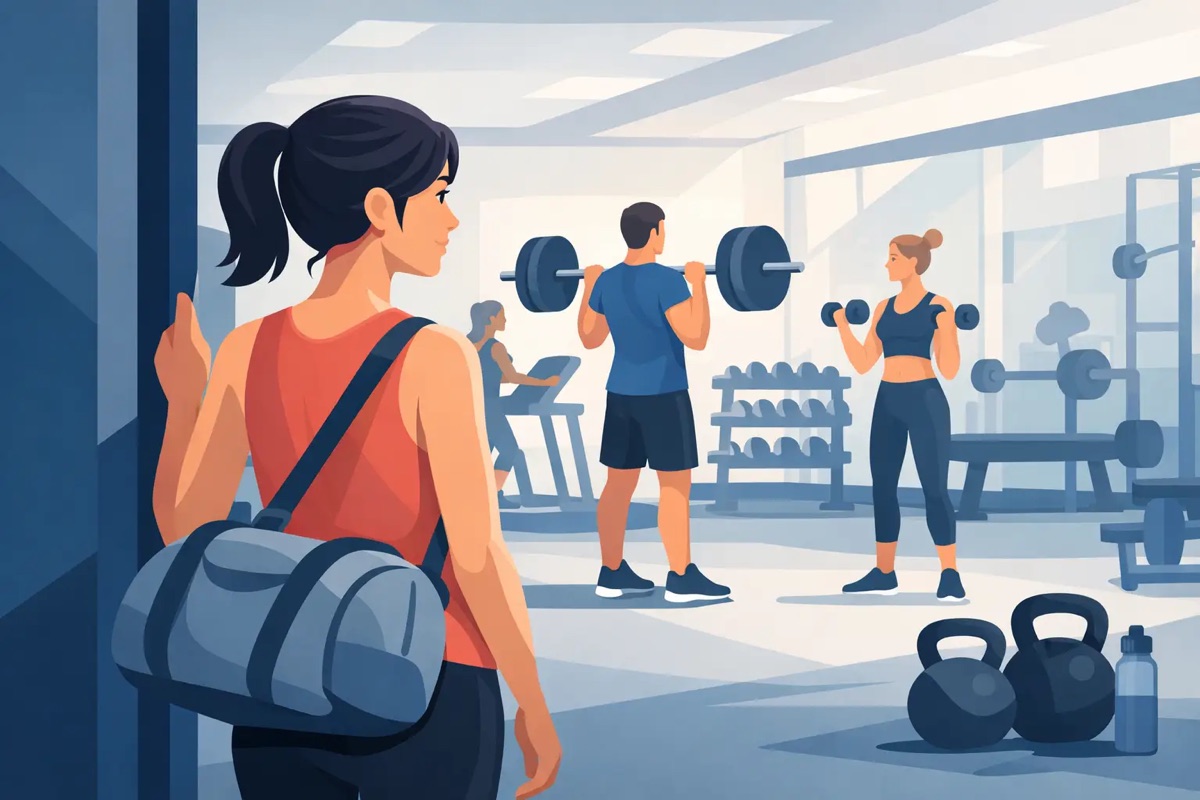
Build Gym Confidence From Your First Visit
What gym confidence actually looks like
The hardest part of a first gym visit is often not the workout. It is the moment you walk through the door, scan a room full of equipment, and wonder where to begin. Real gym confidence does not come from knowing every exercise or lifting the heaviest weight. It comes from having a clear next step, using support when you need it, and giving yourself permission to be new.That matters whether you are starting a routine after years away, returning from an injury, training around a busy Richmond commute, or stepping into a gym for the first time. The right environment should make progress feel possible from day one, not make you feel as though you need to earn your place there.Gym confidence is not loud. It is not claiming a rack for an hour or knowing the name of every machine on the floor. It is the calm understanding that you can arrive, choose a suitable workout, adjust when something does not feel right, and leave knowing you did something worthwhile.For a beginner, that may mean completing 25 minutes of movement without getting overwhelmed. For someone managing knee pain, it may mean knowing which exercises to skip and when to ask for professional guidance. For an experienced lifter, confidence can mean progressing with better technique rather than chasing a weight that is not ready yet. The goal shifts away from looking experienced. You do not need to perform fitness for anyone else.
Start with a small, repeatable plan
Walking in without a plan turns a gym into a series of decisions: should I use the treadmill, is that bench available, am I doing this correctly. Decision fatigue can make even motivated people leave early.Your first few sessions should be intentionally simple. Choose one warm up, a handful of movements, and a realistic finish time. A 35 minute plan you repeat twice a week will build more momentum than an ambitious 90 minute workout you avoid.A practical full body starting session might include five to 10 minutes of easy walking or cycling, followed by a leg press or supported squat pattern, a chest press, a seated row, and a simple core exercise. Use a load that lets you move with control and leave two or three repetitions in reserve. Finish with a short walk, gentle mobility work, or a few minutes to let your breathing settle.Machines are often a smart starting point, not a lesser version of training. They reduce the balance and setup demands of an exercise, so you can learn how a movement should feel. Free weights, cables, and more complex lifts have a valuable place too, but the best tool depends on your experience, goals, and current mobility.
Make the first visit easier before you arrive
Confidence begins before the workout. Pack comfortable clothing, supportive shoes, water, and headphones if music helps you focus. Arrive early enough to settle in, but not so early that you sit in the parking lot building the visit up in your head.If navigating an unfamiliar gym is what concerns you, make your first goal a visit and a short workout. Learn where the change rooms, water stations, cardio area, strength floor, and cleaning supplies are. Knowing the layout removes a surprising amount of friction from the next visit.It also helps to choose a time that matches your comfort level. Some people enjoy peak energy and a busy floor. Others prefer a quieter mid-day, late evening, or weekend session. Neither preference is more committed. The best time is the one you can maintain.At Fittopia, a complimentary one on one intro session can turn that first visit into a guided starting point. It is an opportunity to discuss goals, learn safe equipment setup, and leave with a plan rather than piecing one together from social media.
Use expert support before you need a setback
Many people wait to ask for help until they are injured, frustrated, or ready to quit. A better approach is to use expert hands early. Certified trainers can show you how to adjust a machine, establish a safe range of motion, and progress a program without adding unnecessary complexity.This is especially valuable if you are new to resistance training, returning after pregnancy, managing a chronic condition, or rebuilding after an injury. A good coach does not make you dependent on them. They teach you enough to train independently with greater assurance.Pain deserves a different response than normal training effort. Muscles working hard, breathing heavily, and mild next day soreness can be expected when starting. Sharp pain, joint pain that worsens during a movement, numbness, dizziness, or symptoms that change how you walk should not be pushed through. Pause, modify, and speak with an appropriate professional. For people with a rehabilitation history, training and physiotherapy can work together, building capacity gradually with progressions that respect where you are now.
Stop comparing your beginning to someone else's middle
The most confident person in the gym is rarely the person drawing the most attention. More often, it is the member following their program, adjusting their station between sets, and focusing on their own work.Comparison is common, especially in a polished facility with serious athletes and experienced lifters. But shared space does not mean shared goals. One person may be preparing for a competition. Another may be training for pain-free stairs, better sleep, or enough strength to carry groceries comfortably. Both goals belong on the training floor.Try replacing appearance based questions with practical ones. Instead of asking whether you look like you know what you are doing, ask whether you can perform this movement with control. Instead of worrying about how much weight someone else uses, ask whether this is the right challenge for you today.That mindset also makes it easier to modify. Use the lighter dumbbells. Take longer rests. Choose a bench supported variation. Attend a small group class where an instructor can offer cues. These are training decisions, not signs that you are behind.
Build confidence through consistency, not intensity
A hard workout can feel satisfying, but intensity alone does not create a sustainable routine. Confidence grows when you keep promises to yourself, especially small ones. Two sessions a week for a month can change how familiar the gym feels. Familiarity reduces anxiety, and reduced anxiety makes consistency easier.Track a few meaningful signals: how many sessions you completed, whether your form felt more controlled, how your energy changed, or whether a daily task became easier. Scale weight can be useful for some goals, but it is only one data point. Strength, posture, mobility, sleep, and resilience all count.There will be weeks when work runs late, family needs more of you, or your body needs recovery. A flexible plan is not a failed plan. On those weeks, a shorter session, a Pilates class, a mobility focused workout, or a walk may be exactly what keeps your routine alive.
Find the training style that helps you show up
Not everyone builds confidence in the same setting. Some people want the focus of a strength floor and a structured lifting program. Others feel more at ease learning movement in a reformer Pilates class, where instructor direction and smaller group sizes provide clear feedback. Many benefit from combining both.Pilates can support body awareness, core control, mobility, and alignment. Strength training develops the muscle and bone supporting capacity needed for daily life, sport, and long term independence. Neither has to be an all or nothing choice. The right mix depends on your goals, injury history, preferences, and how you enjoy moving.For older adults, confidence may begin with balance work, supported strength exercises, and a gradual approach to getting up and down from the floor. For athletes, it may come from refining technique under load. For women who have felt uncomfortable in traditional gym spaces, it may mean finding an instructor led setting where questions are welcomed and progression is clearly explained.The standard should stay high for everyone: clean equipment, thoughtful coaching, safe progression, and a community where beginners and advanced members can train with purpose.Your first gym session does not need to transform your life. It only needs to make the second session more likely. Learn one machine. Ask one question. Complete one short plan. Each visit gives you more evidence that the gym is not a place you have to be ready for before you arrive. It is a place where readiness is built, one well supported session at a time.
More Articles
Ready to train?
Start Your Journey at Fittopia
Whether you are brand new to fitness or looking to level up, Fittopia has the coaches, equipment, and environment to get you there.
Book your free intro session →