Reformer Pilates Versus Mat Pilates Compared
The core difference
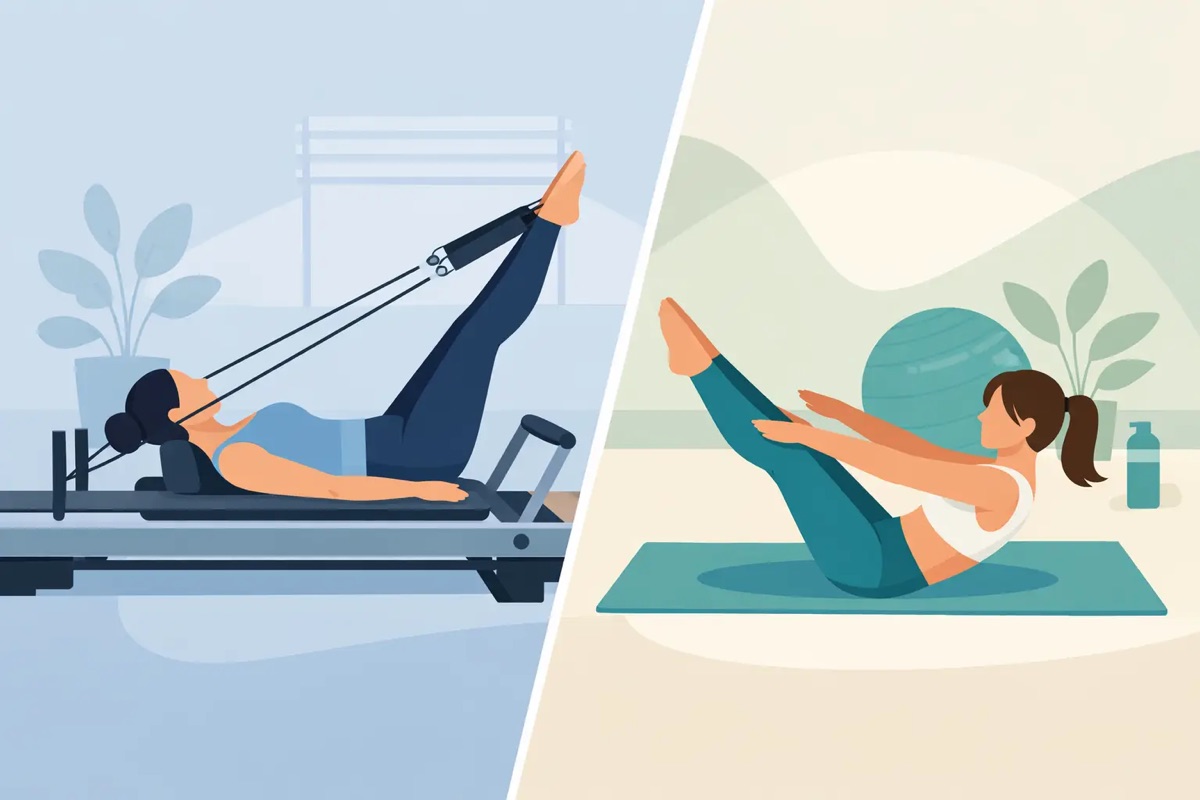
A controlled roll-up can feel completely different when springs are helping, or challenging, every centimetre of the movement. That is the real distinction between reformer Pilates and mat Pilates: both build better control, posture, and body awareness, but the way they load your body is not the same.For Richmond adults choosing a first Pilates class, the right option is less about which format is better and more about what will help you move consistently and confidently. Your goals, injury history, current strength, and preference for guidance all matter.Mat Pilates uses body weight, gravity, and a mat to train core stability, mobility, alignment, and muscular endurance. A class may also include small equipment such as bands, rings, or light balls, but your body is the primary source of resistance. The work can look calm, yet a well taught mat class can be demanding because there is nowhere to hide from your own control.Reformer Pilates uses a moving carriage, adjustable springs, straps, and a footbar. The springs provide resistance, but they can also provide assistance. This is what makes the reformer remarkably adaptable. A certified instructor can change the load and setup to make an exercise more accessible for a beginner, more precise for someone rebuilding after pain, or significantly more challenging for an experienced trainee.Neither format is a shortcut. Pilates is built on quality of movement: breathing with intention, controlling the pelvis and ribcage, and creating strength through a full, comfortable range of motion. The equipment simply changes the feedback and the options available to you.
What reformer Pilates does especially well
The reformer offers a level of variety that keeps training fresh while still reinforcing the fundamentals. Springs create smooth resistance in multiple directions, so you can train the legs, hips, back, arms, and core without relying on impact or heavy external loads. For many people, this makes it an appealing bridge between rehabilitation minded exercise and more traditional strength training.Resistance can be increased for movements such as footwork, rows, and presses, or reduced when you need support finding a pattern. Someone with limited hip mobility may benefit from the carriage and straps while learning to move with better alignment. Someone who already lifts weights may use stronger spring settings and a slower tempo to challenge single leg stability, core control, and shoulder strength.That adjustability is valuable for adults whose bodies do not fit neatly into a beginner or advanced category. You may be fit but returning after a knee issue. You may be new to exercise but ready to build strength. You may be managing desk related stiffness while training for a sport.The carriage also moves when you move it. That immediate feedback can reveal whether one hip is shifting, whether the shoulders are creeping upward, or whether momentum is taking over. For people who struggle to feel their core working, the straps, springs, and footbar can make alignment easier to understand.Reformer Pilates is often a smart option for people who want to train hard without jumping or pounding. It can support adults returning to movement after a sedentary period, runners balancing repetitive impact, and older adults building strength, balance, and confidence. If you have an active injury, persistent pain, or a recent procedure, start with guidance from an appropriate regulated health professional before joining a class.
Where mat Pilates shines
Mat Pilates is portable, direct, and highly effective. It asks you to organize your own body against gravity, which can build deep core endurance and a practical understanding of alignment. You do not need a machine to learn how to breathe well, stabilize your trunk, or strengthen the muscles that support daily movement.A good mat class teaches transferable skills. You learn how to control your pelvis during a bridge, keep your ribs from flaring during arm movements, and create stability through the hips during side lying work. Those skills carry into walking, lifting, strength training, and everyday tasks such as getting up from the floor.Because there are fewer moving parts, mat Pilates can be an excellent place to focus on technique. It also makes consistent movement more accessible outside the studio. Once you understand the exercises, a mat, a little floor space, and a well designed routine can keep your practice going while travelling or during a busy week.Mat work can be surprisingly intense, particularly in exercises that demand long lever positions, slow repetitions, and sustained abdominal control. Without spring assistance, movements such as roll-ups, planks, and leg lowering patterns may be difficult for beginners or people with certain mobility restrictions. That is the trade-off. Mat Pilates is beautifully simple, but simplicity does not always mean easier. A person with wrist sensitivity, neck tension, low back discomfort, or difficulty getting down to and up from the floor may find a reformer setup more comfortable at first.
Which option fits your goal
If your priority is building confidence as a beginner, either class can work with a skilled instructor. Reformer Pilates may feel more approachable if you value personalized setup, adjustable resistance, and detailed feedback. Mat Pilates may suit you if you prefer learning fundamental movement with minimal equipment and want a practice you can repeat anywhere.If your goal is strength and athletic performance, do not frame Pilates as a replacement for every type of training. Reformer work can strengthen movement quality, trunk stability, hip control, and shoulder mechanics that complement a progressive resistance program. Mat work can develop endurance and control with very little equipment. For building maximum muscle size or strength, dedicated resistance training remains important, while Pilates can help you train better and recover with more intention.If you are working around pain, stiffness, or a past injury, choose a setting that respects your starting point. The right class is one where you can modify without embarrassment and receive clear coaching. Pain should not be your measure of progress. Productive effort is normal, while sharp, increasing, or unfamiliar pain is a signal to stop and seek professional advice.If you are focused on posture, both formats can help you develop the strength and awareness to stand taller and move with more control. Still, posture is not a single fixed position to force all day. The more useful goal is capacity: strong hips, a mobile upper back, stable shoulders, and enough movement variety that your body is not locked into one position for hours.
Can you do both?
Absolutely, and the two formats often work best together. Reformer sessions can help you access patterns, build strength with spring resistance, and explore a broader exercise library. Mat sessions can test how well you maintain that control without the machine's feedback.You might choose two reformer classes weekly when you want coaching and structured progression, then add a short mat session at home for mobility and core practice. Or you may use mat Pilates as your main routine and book reformer classes when you want more individualized instruction. Consistency will deliver more than chasing the most complicated exercise.At Fittopia Wellness Studio, AXIS reformers, certified instruction, and small group movement classes create a modern setting for that progression. Whether you are stepping into your first class, returning to movement after time away, or adding intelligent training alongside the gym, high standards should never come at the cost of feeling welcome. If you would rather start one to one, private Pilates gives an instructor your full session to work with.
What to expect in your first class
Arrive a few minutes early, wear clothing that lets you move freely, and choose grip socks if your studio requires them. Tell the instructor about relevant injuries, limitations, or concerns before class begins. This is useful information, not an interruption.In a reformer class, expect an orientation to the carriage, springs, straps, and footbar. The instructor should explain how to change positions safely and give you spring guidance. In a mat class, expect careful cues around breathing, alignment, and modifications, especially when exercises involve the neck, wrists, hips, or lower back.Your first session is not an audition. Use lighter resistance when advised, take breaks when needed, and prioritize form over range. The goal is to leave feeling more capable, not depleted for the sake of it.Choose the class that makes you want to return next week. With thoughtful instruction and steady practice, your body will tell you where it can build from there.
More Articles
Ready to train?
Start Your Journey at Fittopia
Whether you are brand new to fitness or looking to level up, Fittopia has the coaches, equipment, and environment to get you there.
See the Studio intro offer →