Reformer Pilates for Strength and Better Movement
What makes reformer Pilates different
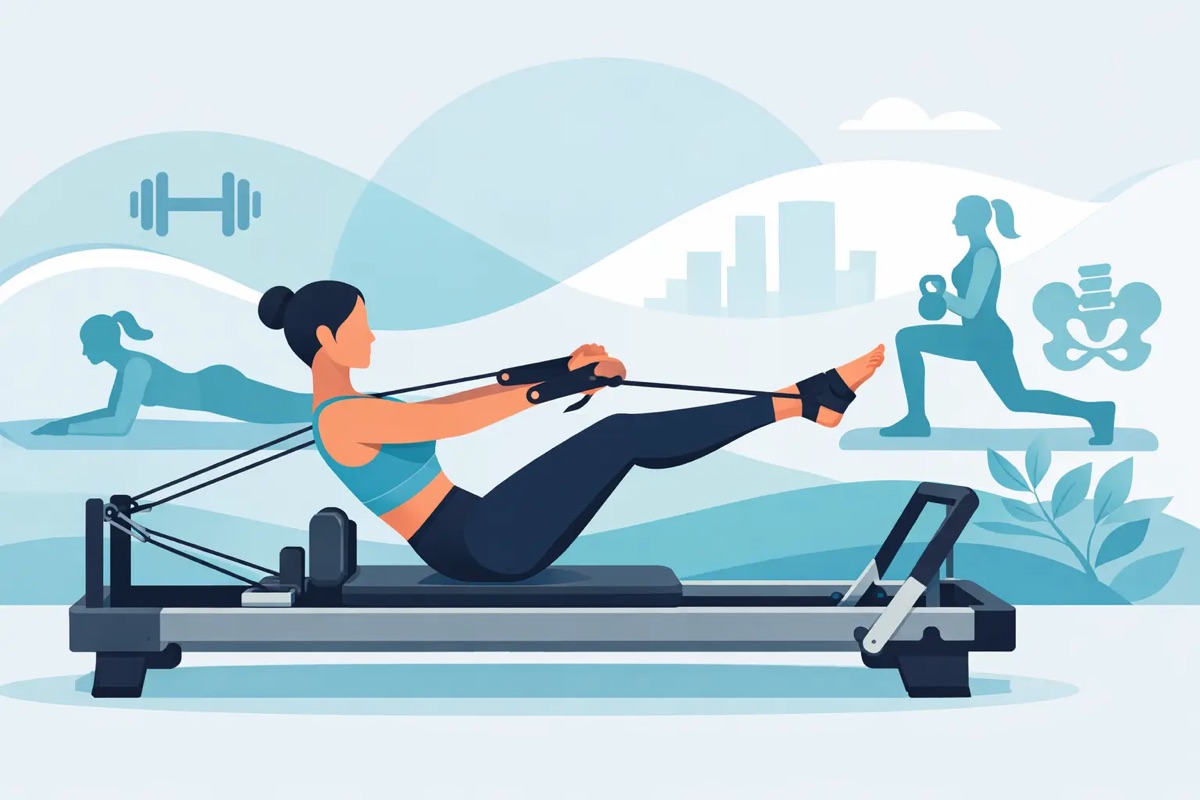
A good workout should leave you feeling more capable in the life you actually live. Reformer Pilates does exactly that: it challenges your muscles, improves control and helps you move with more confidence without relying on impact, frantic pacing or guesswork. Whether your goal is a stronger core, better posture, a return to exercise after time away or smarter cross-training beside your gym routine, the reformer creates a focused place to build from.The reformer is a moving carriage fitted with springs, straps, a footbar and adjustable settings. Those springs provide resistance, but they can also provide assistance. That distinction is what makes the method so versatile. A beginner may use the springs to feel supported while learning a movement pattern, while an experienced member may use them to create serious resistance, instability and control demands.Unlike a workout that asks you to push through as many repetitions as possible, reformer Pilates rewards precision. You learn to organize your ribs, pelvis, shoulders and breath before adding range, load or speed. Small adjustments can make an exercise feel completely different. That is why instructor quality matters: expert eyes can help you find the work in the right place rather than simply working harder.The result is training that can feel calm and highly athletic at the same time. Your deep core works alongside your glutes, legs, back, arms and stabilizing muscles. You are not just moving a carriage. You are learning how to create force while staying connected and controlled.
Strength without unnecessary impact
Many people first try reformer Pilates because they want a stronger core or a more toned look. Those are valid goals, but the benefits often extend well beyond the studio.Spring resistance makes it possible to train the lower body, upper body and trunk in multiple positions: lying down, kneeling, sitting, standing and side-lying. This variety can challenge muscles in ways that feel joint-friendly for many people. It is particularly appealing if running, jumping or heavy loading is not the right fit on a given day.Low impact does not mean low effort. A controlled lunge, plank variation or long sequence of leg work on the carriage can expose gaps in stability quickly. Progress comes from adding resistance, refining alignment, extending time under tension or moving with greater range and control.
Mobility that has a purpose
Flexibility alone is not the goal. Useful mobility means having access to range and the strength to control it. Reformer work can help you explore hip, shoulder and spinal movement while maintaining tension where it is needed.For desk-bound professionals, that may mean a more open upper back and better shoulder positioning. For active adults, it may mean more confidence moving through a squat, lunge or overhead reach.
Better awareness of posture and movement habits
Posture is not one frozen position held perfectly. It is your ability to adjust, support yourself and move out of the positions you spend too long in. Pilates develops body awareness through repetition and clear coaching. Over time, many members notice they can recognize when they are gripping their neck, shifting into one hip or losing control through their lower back.That awareness can carry into strength training, golf, running, workdays and everyday tasks such as lifting groceries or climbing stairs. It is not a shortcut or a guarantee of pain relief, but it is a valuable foundation for moving more intentionally.
Who reformer Pilates is for
Reformer Pilates is not reserved for dancers or people who already look flexible. It can be an excellent starting point for adults who want structured, instructor-led movement but feel intimidated by traditional fitness spaces. The equipment offers support, and a well-paced class makes room to learn before trying to perform.It also suits experienced lifters and athletes. Strength training builds muscle and power; reformer work can complement it by emphasizing control, unilateral stability, mobility and trunk strength. The best programme depends on the person. If your primary goal is building maximum muscle or lifting performance, Pilates should usually support rather than replace progressive resistance training. If your current focus is returning to consistent movement, improving mobility or developing confidence, it may take a more central role.For older adults, the controlled pace and adaptable resistance can support training for balance, leg strength and everyday independence. For people managing persistent discomfort, recovering from injury or navigating a medical condition, the right starting point depends on professional guidance. A Pilates instructor can modify movement, but diagnosis and rehabilitation planning belong with a qualified health professional. When Pilates and on-site physiotherapy work in the same wellness ecosystem, the pathway from rehabilitation to regular training can feel far less fragmented.
Your first reformer class: what to expect
Your first class is not a test. You do not need to arrive with strong abs, flexible hamstrings or a perfect understanding of Pilates terminology. Arrive a few minutes early, wear comfortable clothes that allow movement and choose grip socks if your studio requires them.A certified instructor should introduce the key parts of the machine, explain spring changes and offer clear options throughout class. Expect cues around breathing, alignment and tempo. You may be surprised by how demanding simple movements feel, especially when you slow down enough to control the carriage on both the push and return.The smartest approach is to begin conservatively. Use the variation offered, ask questions when something does not feel right and avoid measuring your progress against the person beside you. Your first goal is not to use the heaviest spring or achieve the biggest range. It is to understand the movement and leave knowing you could return.At Fittopia Wellness Studio, certified instructors lead small-group and private Pilates sessions on premium AXIS reformers, helping members progress with high standards and practical encouragement. That combination matters when you are new, returning after a break or ready to make your training more precise.
How often should you do reformer Pilates
Consistency beats intensity that you cannot sustain. One class each week can be a meaningful addition to a busy schedule, particularly if you are pairing it with walking, gym sessions or another activity you enjoy. Two to three classes per week can create more momentum for people focused on technique, mobility, core strength and whole-body conditioning.Your recovery, training history and overall workload all matter. Someone lifting heavy three or four days weekly may use reformer Pilates once or twice weekly as a complementary session. Someone who has been largely inactive may start with one class and build gradually. Soreness can happen, especially in muscles that have not been asked to stabilize before, but sharp pain, tingling or symptoms that worsen during movement deserve attention rather than determination.
Getting more from every session
The reformer rewards intention. Focus on quality before resistance, and treat modifications as intelligent programming rather than a step down. A lighter spring may make an exercise harder because it demands more control; a heavier spring may be the safer option when support is needed. There is no universal best setting.Tell your instructor about relevant injuries, restrictions or concerns before class. Then give yourself enough time to learn the foundations. Progress may look like steadier hips in a bridge, smoother shoulder movement, a deeper breath or better control in a familiar exercise. Those changes are worth noticing because they are the building blocks of strength that lasts.Choose a class time you can protect, arrive ready to focus and let your instructor meet you where you are. The most effective reformer Pilates routine is the one that makes you feel capable enough to keep moving, week after week.
More Articles
Ready to train?
Start Your Journey at Fittopia
Whether you are brand new to fitness or looking to level up, Fittopia has the coaches, equipment, and environment to get you there.
Explore AXIS Reformer classes →