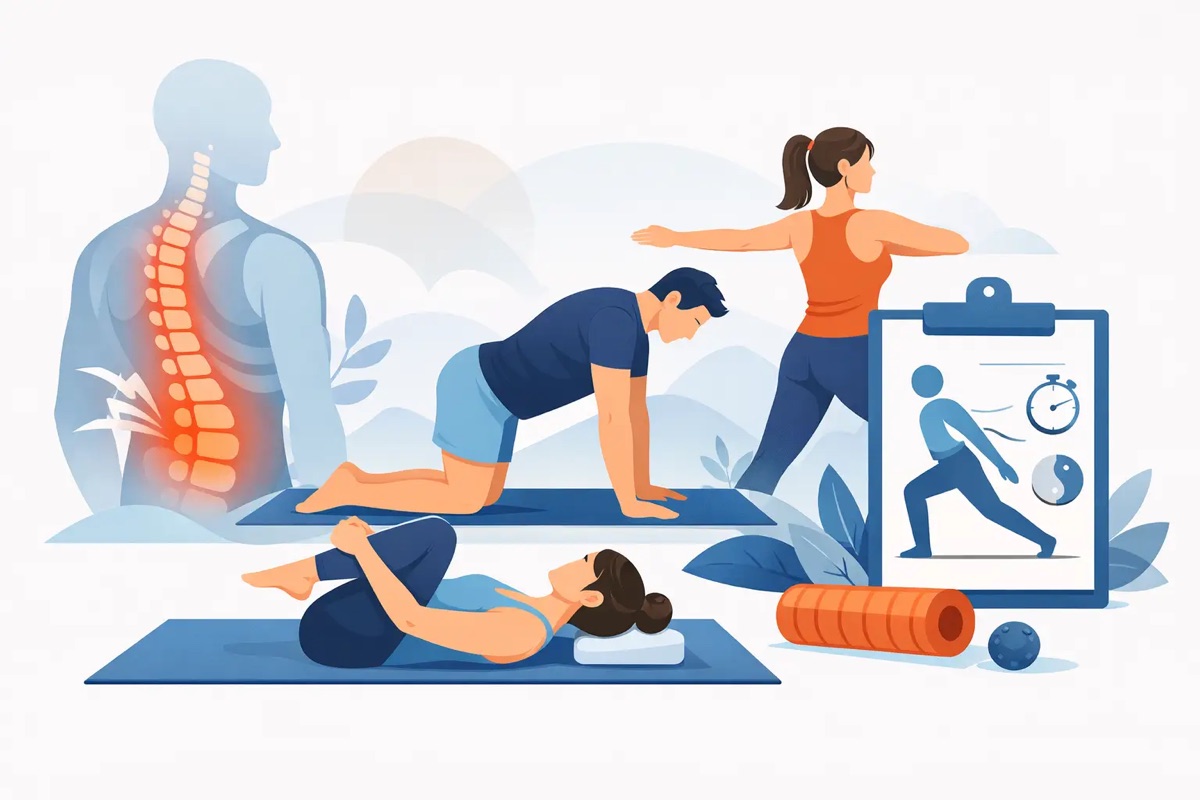
8 Mobility Exercises for Back Pain Relief
Start with a smarter definition of mobility
Back pain rarely responds well to being ignored, stretched aggressively, or pushed through with a hard workout. The right mobility exercises for back pain can help you restore comfortable movement, reduce protective stiffness, and rebuild confidence in everyday tasks, from getting out of a car to training on the gym floor.The goal is not to force your spine into the biggest range possible. It is to give your back, hips, and core more movement options with calm, controlled repetitions. That distinction matters. A movement that feels relieving for one person may irritate another, especially after a recent injury, during a flare up, or when pain travels into the leg.Mobility is active control through a usable range of motion. Flexibility is only one piece of it. You might be able to pull your knee toward your chest, for example, but still lack the hip control to hinge, squat, climb stairs, or lift a grocery bag without your low back taking over.Use a simple rule while you practise: gentle muscular effort and mild stretching are acceptable. Sharp, catching, worsening, or radiating pain is not. Keep the range smaller, slow down, or choose a different movement. Symptoms should settle quickly after your session, not build for hours afterward.
1. Supported 90/90 breathing
Lie on your back with your lower legs supported on a bench, sofa, or wall so your hips and knees are bent roughly to 90 degrees. Rest one hand on your lower ribs and one on your abdomen. Breathe in quietly through your nose, then exhale slowly as though you are fogging a mirror.Complete five to eight slow breaths. Let your ribs soften down on the exhale without pressing your lower back hard into the floor. This is not a dramatic stretch. It is a way to reduce unnecessary tension and find a more comfortable starting position before moving.
2. Pelvic tilts
Stay on your back with your feet on the floor and knees bent. Gently tip your pelvis so your lower back lightly approaches the floor, then return to a neutral, comfortable arch. Keep the motion small and smooth.Try eight to 12 repetitions. Pelvic tilts are useful when your back feels guarded because they let you practise spinal movement without demanding a large range. If flattening your back aggravates symptoms, make the movement smaller or focus only on returning to neutral.
3. Cat-camel
Set up on hands and knees, with your hands under shoulders and knees under hips. Slowly round your upper and lower back as you exhale, then reverse the movement by gently opening your chest and tailbone as you inhale.Move through a pain free range for six to 10 repetitions. Avoid forcing the end positions. Cat-camel is often most effective as a movement rehearsal rather than a deep stretch, particularly first thing in the morning or after long periods at a desk.
4. Quadruped rock-back
From hands and knees, keep your spine long and slowly send your hips back toward your heels. Pause before the point where your back rounds sharply or symptoms increase, then return to the start.Complete eight controlled repetitions. This exercise introduces a hip hinge pattern while reducing load through the spine. It can be especially helpful for people who feel their low back working too hard during squats, deadlifts, gardening, or lifting from lower shelves.
5. Open-book thoracic rotations
Lie on your side with knees bent and stacked, arms reaching in front of you. Keep your knees together as you sweep the top arm open across your body, allowing your chest to rotate. Return slowly.Perform six to eight repetitions per side. Your lower back may rotate a little, but the focus is your upper back and rib cage. If your shoulder does not comfortably reach the floor, stop wherever you can breathe easily and maintain control.
6. Half-kneeling hip flexor rock
Kneel on one knee with the other foot in front. Keep your torso tall, lightly tighten your glute on the kneeling side, and gently shift forward until you feel the front of that hip open. Do not lean your chest back or crank into an aggressive stretch.Hold for three to five calm breaths, then repeat on the other side. Tight feeling hip flexors are common after sitting, but they are not automatically the cause of back pain. This drill earns its place when it improves your ability to stand tall, walk, or train without overextending your low back.
7. 90/90 hip switches
Sit with both knees bent, one leg folded in front and the other to the side. Rotate both knees toward the opposite side in a controlled switch. Use your hands behind you for support if needed.Aim for five to eight transitions per side. Keep the range honest. Sitting higher on a yoga block or bench can make this exercise more accessible, while advanced trainees can gradually use less hand support. Better hip rotation can reduce the urge to twist repeatedly through the lumbar spine during sport and daily life.
8. Glute bridge with a pause
Lie on your back with knees bent and feet hip width apart. Press through your feet to lift your hips until your body forms a comfortable line from shoulders to knees. Pause for two seconds, then lower with control.Complete six to 10 repetitions. Although this is partly a strength exercise, it belongs in a mobility routine because it teaches your hips to extend without dumping the movement into your lower back. Stop short of the height where you feel pinching or compression.
How to build mobility into your week
Perform this sequence two to four times per week, or in shorter blocks on most days if it feels good. Start with one round and use slow breathing. Quality is the standard, not exhaustion.A 10 minute routine works best when it is connected to a real moment in your day. Try two or three movements after your commute, before a strength session, or during a break from computer work. Consistency usually matters more than a long session done once every few weeks.On training days, use mobility to prepare for the patterns you plan to load. Before lower body strength work, pelvic tilts, rock-backs, hip flexor rocks, and bridges can help you rehearse hip control. Before upper body training, breathing, cat-camel, and open-book rotations may help you find a more comfortable thoracic position for pressing and pulling.Do not treat mobility as a substitute for strength. Backs generally benefit from gradual exposure to meaningful activity, whether that is loaded carries, rows, squats, deadlifts, reformer Pilates, walking hills, or a well designed beginner program. Mobility creates options. Strength helps you trust those options under real world load.
When back pain needs an assessment
Exercise is not the right first step for every situation. Seek urgent medical attention for new bowel or bladder changes, numbness around the groin, severe or progressive leg weakness, unexplained fever, significant trauma, or pain that is constant and worsening. These symptoms need prompt assessment.For persistent pain, recurring flare ups, or pain that shoots below the knee, a physiotherapist can help identify relevant movement patterns and create a plan that matches your tolerance. This is particularly valuable if you have stopped training out of fear, are returning after an injury, or cannot tell whether a movement is helping or provoking your symptoms.At Fittopia, that progression can include certified coaching, reformer Pilates, and on site physiotherapy, so your plan can move from symptom management toward durable, capable movement without sending you between disconnected services.Your back does not need a perfect posture or a flawless exercise routine. It needs regular, well chosen movement, sensible progression, and enough patience to let confidence catch up with capacity.
More Articles
Ready to train?
Start Your Journey at Fittopia
Whether you are brand new to fitness or looking to level up, Fittopia has the coaches, equipment, and environment to get you there.
Explore pain relief at Fittopia →